

BIOMECHANICAL / MUSCULOSKELETAL ASSESSMENT
Detailed analysis of your walking and running style
Biomechanical / Musculoskeletal Assessment
In many cases, podiatry research has not kept pace with modern advancements in biomechanics. At The Podiatry Clinic, we actively bridge this gap by staying up to date with the latest research and working closely with experts in biomechanics. This allows us to gain a deeper understanding of how the body functions — from the feet upward and from the hips downward — and apply this knowledge directly to your care.
Biomechanics is the study of how the body moves, focusing on how muscles, bones, tendons, and ligaments work together to create movement. The way your feet function can influence the entire body, including the ankles, legs, knees, hips, and lower back. This is because the body operates as a connected kinetic chain, where issues in one area can affect another.
When muscles are weak or tight, movement patterns are poor, or excessive stress is placed on tissues, the body may struggle to cope with the load. This can lead to pain, inflammation, swelling, or even injuries such as tears and fractures.
What is a Biomechanical Assessment?
If you’re unsure whether you need a biomechanical assessment, you’re not alone. While it’s difficult to determine suitability without an in-person consultation, we can explain what the process involves and how it may help.
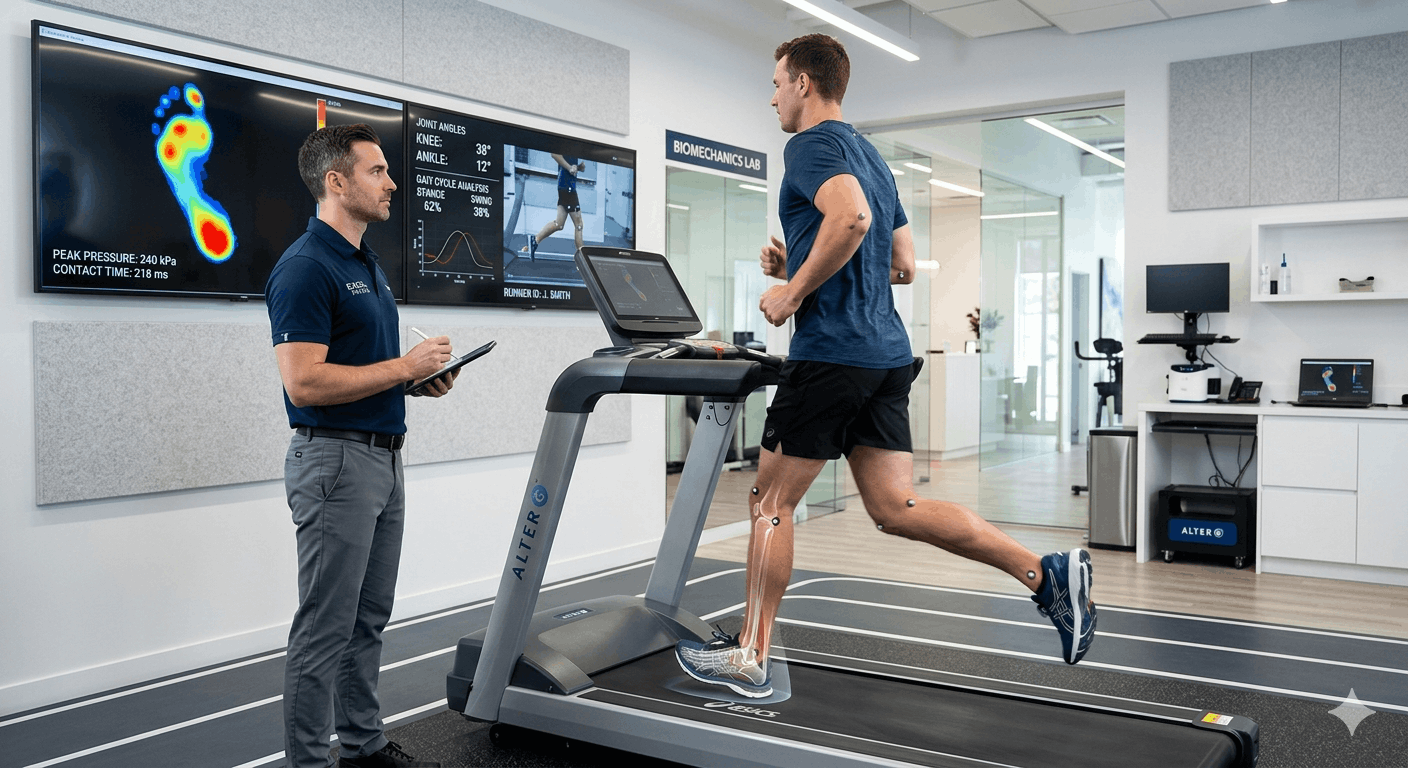
A biomechanical assessment evaluates how muscular forces and gravity affect your body. It focuses primarily on the lower limbs, assessing alignment, structure, strength, and movement patterns. Each assessment is tailored to the individual, as our clinicians use a range of tests based on their professional judgement.
These assessments are carried out by trained medical professionals using advanced equipment to accurately measure movement and force distribution.
Why Might You Need a Biomechanical Assessment?
The human body is rarely perfectly symmetrical, and even small differences can influence how you stand, walk, or run. Variations such as leg length differences, bowed legs, or pelvic imbalances may not seem significant, but over time they can lead to compensatory movements that place additional strain on joints, muscles, and ligaments.
Other factors such as high or low foot arches, previous injuries, or repetitive stress can also contribute to pain and dysfunction.
You may benefit from an assessment if you experience:
Congenital deformities
Sports-related injuries
Injuries from accidents
Age-related wear and tear
Plantar fasciitis
Achilles tendonitis
Heel pain
Overuse injuries
Treatment Options After Assessment
Following your assessment, your podiatrist will recommend a personalised treatment plan based on your specific needs. Common treatment options include:
Custom orthotics to improve foot alignment
Targeted exercises to enhance strength and mobility
Guidance on appropriate footwear
Strapping and taping techniques for support and recovery